
by Kelley Dong
Featured photo by Parastoo Anoushahpour.
There was another film festival this summer. It was before the big one in September. For four days in August, the Re:assemblage Collective hosts Diffusion across three venues in Chinatown. Diffusion is a film festival dedicated to what it calls experimental non-fiction, an elastic and lightly incendiary moniker that could be stretched to describe anyone from Eadward Muybridge to Trinh T. Minh-ha—whose Reassemblage (1982) serves as the collective’s namesake—or the latest Nathan Fielder project. There is some overlap with the programming of festivals like Prismatic Ground, International Film Festival Rotterdam, and the Oberhausen International Short Film Festival. But at this point there is no apparent ambition for Diffusion to become the experimental non-fiction equivalent of a “festival of festivals,” as the Toronto International Film Festival once called itself. The infrastructure is deliberately human. All filmmakers are paid, attendance is pay what you can, and all donations go to the Toronto Indigenous Harm Reduction Collective and No Arms in the Arts (two projects which do not qualify for state funding) in the spirit of paying forward. There is free food, free cocktails and beer every night, and a karaoke party after the closing program. For the last five years none of these features have really changed except for maybe the catering menu. To uphold these commitments requires the festival to be locked into a smaller scale where community and solidarity remain tenable without compromise.


Given the tendency for film festivals of this nature to invoke neutrality while simultaneously wrapping themselves in the trappings of various political struggles, it would be remiss not to mention that Re:assemblage is a signatory to the Palestinian Campaign for the Academic and Cultural Boycott of Israel (PACBI). This has never been a secret, and a collective curatorial statement published ahead of opening night further clarified the festival’s position against the “absorption and aestheticization of political dissent through institutional containment.” Diffusion sets out to be an environment where the notion that art and politics are opposites—as Wim Wenders controversially claimed at this year’s Berlinale—can be properly tested.
Such a decision is as much for the public as it is for the artists, who are here freed from the burden of being either a scapegoat or a mouthpiece. Across the programs, there are no themes at all. But to create the walls of a cinema out of resistance, and with such exactitude and transparency, runs the risk of shrinking the screen. The gamble adds a new set of questions to Andrew Sarris’ conservative warning against the inclusion of experimental films in the New York Film Festival: “the most insidious enemy of art is good taste.” For a festival against institutional containment, what does it mean to go against good taste? If beauty is anchored to the right side of history, is that beauty then contained by a line that cannot be crossed? And what does it mean to take artistic risks in a room of people who generally share those same boundaries and anchors of taste, unleashing discomfort at a gathering united by an urgent need for safety?
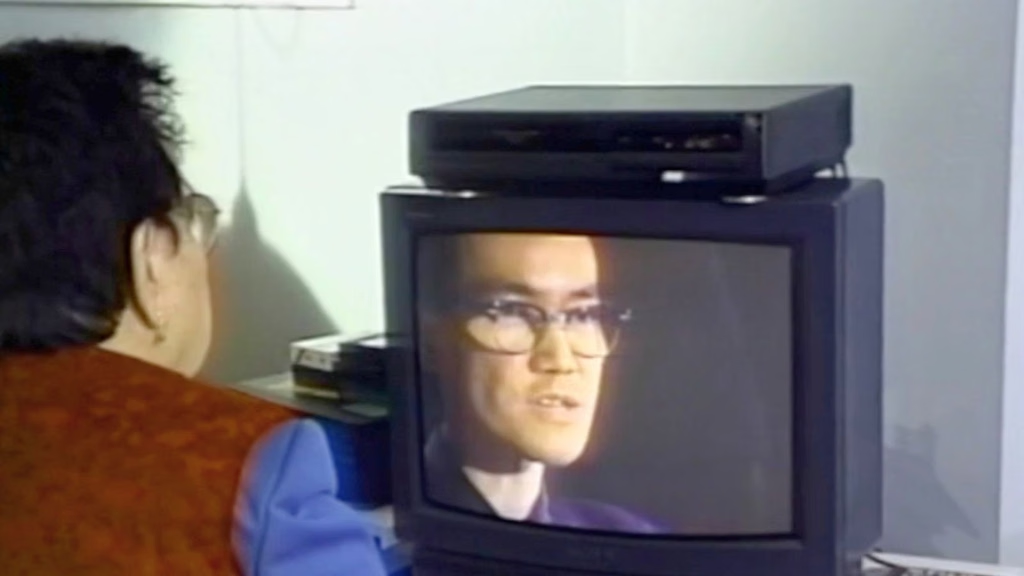
Every year when I attend Diffusion I leave with different variations of the same questions; about the valence of language, the function of the archive, the limits of the first-person, and a third dimension between representation and non-representation to dismantle the mechanics of oppression. Many filmmakers working in this form are working with histories that have been bowdlerized or totally forgotten. The sense of responsibility to these gaps often results in films that are more about failure than justice or beauty. Thus they are more dependent on overt framing devices like on-screen text and auto-fictional, autobiographical descriptions of the research process. (When it comes to how failure, justice, and beauty are entwined, Theresa Hak Kyung Cha’s exquisite Mouth to Mouth (1975) got right to the point. It arrived in the middle of the opening program, spelling out an alphabet of grief through the body rather than words.) The use of autofiction to reckon with the pitfalls of research takes center stage in Lesley Loksi Chan’s Lloyd Wong, Unfinished (2025). Chan interjects into fragmented footage shot by Wong, the late Canadian artist who died of AIDS in 1994, with intertitles about their own struggle to the right framework for the film. Wong himself is extremely sardonic and articulate, puncturing Canadian neoliberalism with ease even as he grows more frail. Chan’s reticence to speak for or over him makes sense in that regard, but the continual expression of that sentiment ironically enlarges the filmmaker’s shadow over the material.
A trilogy of newly restored films by the Iraqi filmmaker Parine Jaddo, screened in Canada for the first time, made very apparent that these questions of formal grammar have already been thoroughly addressed. Spanning from 1995 to 2002, the films are united by juxtapositions of leisure with violence and an emphasis on sensations and stories. These are depicted in lush and intimate images of women drinking tea, reading in bed, and doing yoga in the living room, as news reports and gunfire are heard at a distance. The final film in the trilogy, entitled Teyh (Astray) (2002), takes place in the apartment of an Iraqi filmmaker residing in the United States during the immediate aftermath of 9/11. The event punctures the filmmaker’s fragile sense of safety in America and transforms the gravity of her daily routine without ever appearing onscreen. Resisting the route of explanations and clarifications, Jaddo achieves a mixture of moods that most diasporic art today still aspires to capture: sexy, funny, and mournful.

A similar fidelity to pleasure surfaces in Sahar Te’s Baba Bahram, Look at the Flowers (2025) and Alex Lo and Dextra Darling’s DEXTRA_1 (2025). Both films are about a little camera. The first belongs to Te’s younger brother, who gathers footage in the garden of the family’s home in Tehran to share with his grandfather. The second is carried around by a young trans woman (Darling) during her week-long stay at a punk house occupied by a coterie of boisterous trans people. Her main goal is to try out the name Dextra, but within days everyone is sharing hormones and vapes. The joys of making a movie emerge between starts and stops. Crackling laughter and the blur of a camera being tossed around, words that aren’t properly caught by the microphone, supplant spotty memory and capture a political subjectivity that evolves far faster than the word or the image. Kate Solar’s for once I dreamed of you (2025) sinks even deeper into filmmaking as intuition. In its entirety, the film is a string of intellectual montage that coalesces the material of film to the textures of nature, with the sprocket holes of the film strip flapping by like the detritus in The Wizard of Oz.
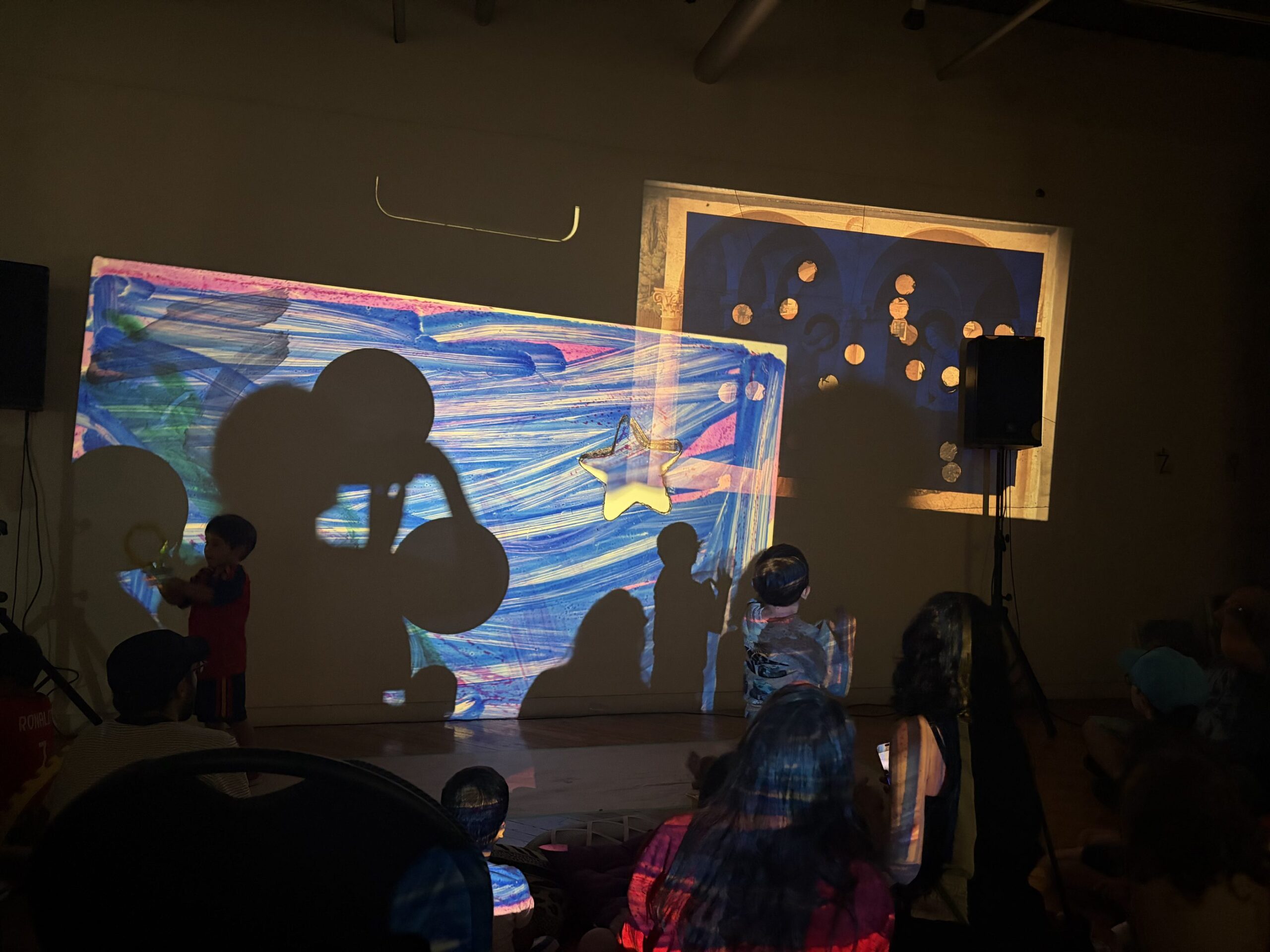
Playfulness was directly encouraged during a daytime workshop for children led by artist Francisca Duran to collage artwork onto 16mm and 35mm slides. This was followed by a visually sumptuous shorts program oriented around craftsmanship and play. Norman McClaren’s Oscar-winning NFB short Neighbours (1952) blends live-action and animation to depict a battle between neighbors over ownership of a beautiful flower. It wasn’t necessarily family-friendly fare, given that the tension rapidly escalates into pillaging and destruction, but its simple parallels to more grave films about political oppression throughout the festival demonstrated shared values across different cinematic histories and forms. I recalled McClaren’s film with more ambivalence on the last night as I watched mystery byrd’s film b.longing (2025), which intercuts scenes of life in Winnipeg (including museum exhibits of encounters between white settlers and Indigenous people) with vulnerable conversations among loved ones about white and settler identity. Together, the works invoked the central problem of Canadian multiculturalism—that it does little to erase past violence or cease ongoing and future attacks—but I found myself wanting more overt differences and tensions between the films than contrasts.
Still, there were instances of much-needed agitation. Lin Htet Aung’s A Metamorphosis (2025), which won the Tiger Short Award at IFFR, extracted a real groan out of me. Coated in an intentionally tacky lo-fi filter, Lin’s film depicts a series of empty rooms and uncanny 3D objects (like an opened condom wrapper bearing the flag of Myanmar) soundtracked by a lullaby sung by the dictator Min Aung Hlaing. The end credits reveal that the dictator’s voice had been rendered using an AI model, suggestive of his omnipresence in state propaganda and the infantilization of the country’s populace. I lack nuance on this matter, so the inclusion of an ecologically destructive tool in an anti-colonial festival mildly confounded me. (An argument against this sort of vivification is concisely made by Larissa Sansour’s Tank (2003), which is a deliberately unedited clip of an Israeli tank cornering a group of young activists.) Those who thought otherwise failed to convince me, since my main grievance was that the voice itself contributes little to the well-covered conversation around whether it is possible to use a tool of surveillance against itself since it aspires mostly to be surveillance state ambience. But I could respect the gumption behind the inclusion. After all, as a formal device there is little difference between the function of the AI model, the intertitle, and the talking head to inject information where its lack is perceived as a threat to truth. And given the unique relationship to censorship in the realm of experimental non-fiction film, AI has a particular appeal worth interrogating.

Actual upset, the sort that reveals the location of the audience’s least worked muscles, came to the fore only once. It was at the beginning. Lodged in the middle of the festival’s opening program, Kalil Haddad’s My Secret Boyfriend Died in a Mass Shooting (2025) kicked things off with some archival sacrilege. The film continues a series of films which transmute gay pornography from the 1980s into elegies for gay lives lost to AIDS by crafting new fictions out of the original fantasy. This one conjured out of a pornographic magazine spread the tale of two boys whose love stays hidden before and after death. Death comes in the form of distorted screams, dark and blurred mounds of bodies from a bad horror sequel. By contorting one dream into another, the film approaches something closer to the truth. Wind trickled by as the crowd bristled. Questions were directed towards Haddad’s ethics, based upon the assumption that the source material itself was real. In his report from last year’s New York Film Festival, Phil Coldiron writes that “for art to have any shot at pointing beyond cynical content and disbelief, it must also succeed as art.” The success of Haddad’s film as art lies in its audacity to adore its subjects both within and far, far beyond context. It dares to engage in projection as one of the most immediate ways to engage with the past. It was not lost on me that this film, along with DEXTRA_1, were both the queerest films of the festival. They were also two films which did not make metatextually obvious what the filmmakers were for or against, except for the right to live and the right to make a film.
The strongest distillation of how slippery the terrain of experimental non-fiction can really get was the grand finale: Sonya Mwambu’s’s expanded cinema performance maono mzimi/unbroken spaces of vision (2026). Mwambu’s’s performance consisted of a film, a second projection superimposed onto the first, a poem (read aloud by the artist’s sister at different intervals) and refracted light bounced about by the artist. The poem described a longing for a distant point of origin, a mother tongue that the filmmaker herself cannot speak looped through the film, and the images—scratches and leader, trees, light, women—slid off the screen and onto the walls. The chirps, hums, and clicks of summer responded. As Mwambu’s’s fragments of context fell apart and elegantly collided, never veering into an easy excess of material or aiming for simple overwhelm, concurrently my attention was called to the festival itself. The brick walls of the gallery courtyard and the people around me with whom I debated and shared free food over the weekend, the confusion and the curiosity that was again provoked this year. Then Diffusion was over, and the staff began setting up the microphones for karaoke, and I was urged to take more pizza.
Kelley Dong is a Toronto-based writer. Their writing has appeared in MUBI Notebook, Cinema Scope, Film Comment, The Village Voice, and the Harvard Film Archive.
If you enjoyed this article, please consider supporting Ultra Dogme on Patreon, Ko-fi, or Substack, so that we may continue publishing writing about film + music with love + care.
Editor note: Special thanks to Re:assemblage Collective for instigating this piece, their work during the editorial process and for providing the photographs.