
by Lé Baltar
Now spanning two shorts and four features, the cinema of Isabel Sandoval represents a kind of “crossing,” what eminent philosopher Paul B. Preciado describes as “a place of uncertainty, of the unobvious, of strangeness.” This crossing, it seems, is a source of power for Sandoval, as it is for Preciado. While each film simultaneously services and subverts the limits of cinematic genres—whether thriller, period drama, or film noir—and invokes familiar thematic threads, something more primal arises throughout: a predilection for the subterranean and for exploring the deeper edges of desire. Seen in its entirety, Sandoval’s filmography is an accumulation of the encounters she has lived off screen and the sensibilities of the moving image artists formative to her—a relationship she inverts, project after project, to arrive at a film form that is undeniably her own and an intoxicating language of sensuality.
Sandoval’s 14-minute directorial debut Señorita (2009), raw and rough-edged to its merit, is indisputably instructive of her thematic fixations. Co-directed by Juan Carlos Riveros, it takes its cue from the film noirs of the 1940s but features a transgender woman as its lead character. Clearly the filmmaker’s signature subversion is already there but has yet to find a more confident outward expression. Played by pre-transition Sandoval, Laura is an enigmatic sex worker who trades the temptation of Manila’s dark cul-de-sacs for a fresh start in the countryside where she looks after Danny Boy (Jose Cristobal Acevedo), who is left behind by his biological mother to work in Japan. But once every month, under the pretense of competing in beauty pageants in the big city, Laura pays a visit to a high-profile client (Markus Sia), whom she satiates with tales of consuming perversion in exchange for money. Sandoval builds her critique to a sentimental finale in which Laura confronts her crumbling sense of self as the camera slowly zooms out.

Will she be able to keep her two worlds separate? It’s a question that trickles through Sandoval’s films, whose protagonists are all women wrestling with unresolved personal conflicts amid the frenzy of living in dangerous times like that of the Marcosian era or the Trump administration. Whereas Laura’s ethical dilemma is more interior, that of Donna/Sofia—her counterpart in Sandoval’s 2011 feature debut Señorita—assumes a more outward and overtly political weight, therefore underlining a desire that is highly economic. The director retains some crucial elements from the short film but raises the stakes here: Trans woman Donna (Sandoval) returns to her small hometown and poses as the aunt of her own child Tomas (Dominic Milano Palomo) as the boy’s biological mother works overseas. Like Laura, Donna leverages her sexual power as an escort, only now she is challenging an entire political infrastructure. She uses the money of her VIP client, the corrupt and powerful Ricky Verano (Richard Manabat), to fund the campaign of the underdog mayoral candidate Pepe Holganza (Gary Lim), who’s up against the equally corrupt incumbent Mayor Tiongson (Roy Sevilla Ho), Verano’s ally. “I’m nobody to you therefore I can be anybody,” Donna tells a young, curious client as she slips into the skin of Sofia. But soon, she learns that her perceived (and newly found economic) power, realized through subterfuge, is yet another piece of bait that Verano has carefully maneuvered her into taking.
Largely inspired by the steely sensibility of Jane Fonda as Bree Daniels in Alan J. Pakula’s acclaimed neo-noir Klute (1971), Señorita (2011) was Sandoval’s attempt to reconcile herself with her transness, though it wasn’t until after the release of her sophomore feature Aparisyon (2012) that she began transitioning. Donna is a reflection of Sandoval’s own internal contradictions, embodied further by the film’s diffuse structure, another element that would recur in Sandoval’s subsequent works. The female protagonist goes up against a larger political structure ruled by violent men, just as the director deconstructs patriarchal (and therefore passive) notions of femininity—even more so in a cinematic tradition like Philippine cinema where trans women characters are barely visible, let alone possess any agency or sense of control. And although Filipino trans cinema has seen substantial growth over the years—especially after the arrival of the likes of Sandoval and Rodina Singh, director of Mamu: And A Mother Too (2018) and Dreamboi (2025)—such movies still largely portray the trans experience in terms of persistent demise, hypersexualization, physical violence, respectability politics, and medical-surgical notions of gender transition.

While Aparisyon does not feature a trans woman as its main protagonist nor Sandoval as its star, it continues the filmmaker’s obsession with the seductive power of ambivalence. At its center is Sister Lourdes (Jodi Sta. Maria), a novice nun living in a sealed monastery by the forest in early-1970s, Ferdinand Marcos–era Philippines. Against the convent’s rigid rules, she remains connected with the outside world by secretly involving herself in political meetings and rallies, which later results in shocking violence. Caught in the sweep of history, Sister Lourdes is a striking incarnation of the chasm between religious dogma and political reality, and desire here manifests in her attempt at making both worlds work, until suddenly, she can’t. As with her first feature, Sandoval’s follow-up lacks a clear and easy ending. The course of the nuns’ lives is about to be changed by the declaration of martial law, but Sandoval leaves all the details off screen. The feeling lingers, but it doesn’t build up to anything explosive, which makes it at odds with the cathartic release the viewer expects to encounter. For the filmmaker, this refusal to offer neat resolutions is a gesture of leaving the audience wanting more, as she acts less as a conduit and more an active agent constantly thwarting their preconceived value judgments. “The less of me the audience has figured out, the more power I have over them,” she wrote in a 2021 e-flux Journal essay.
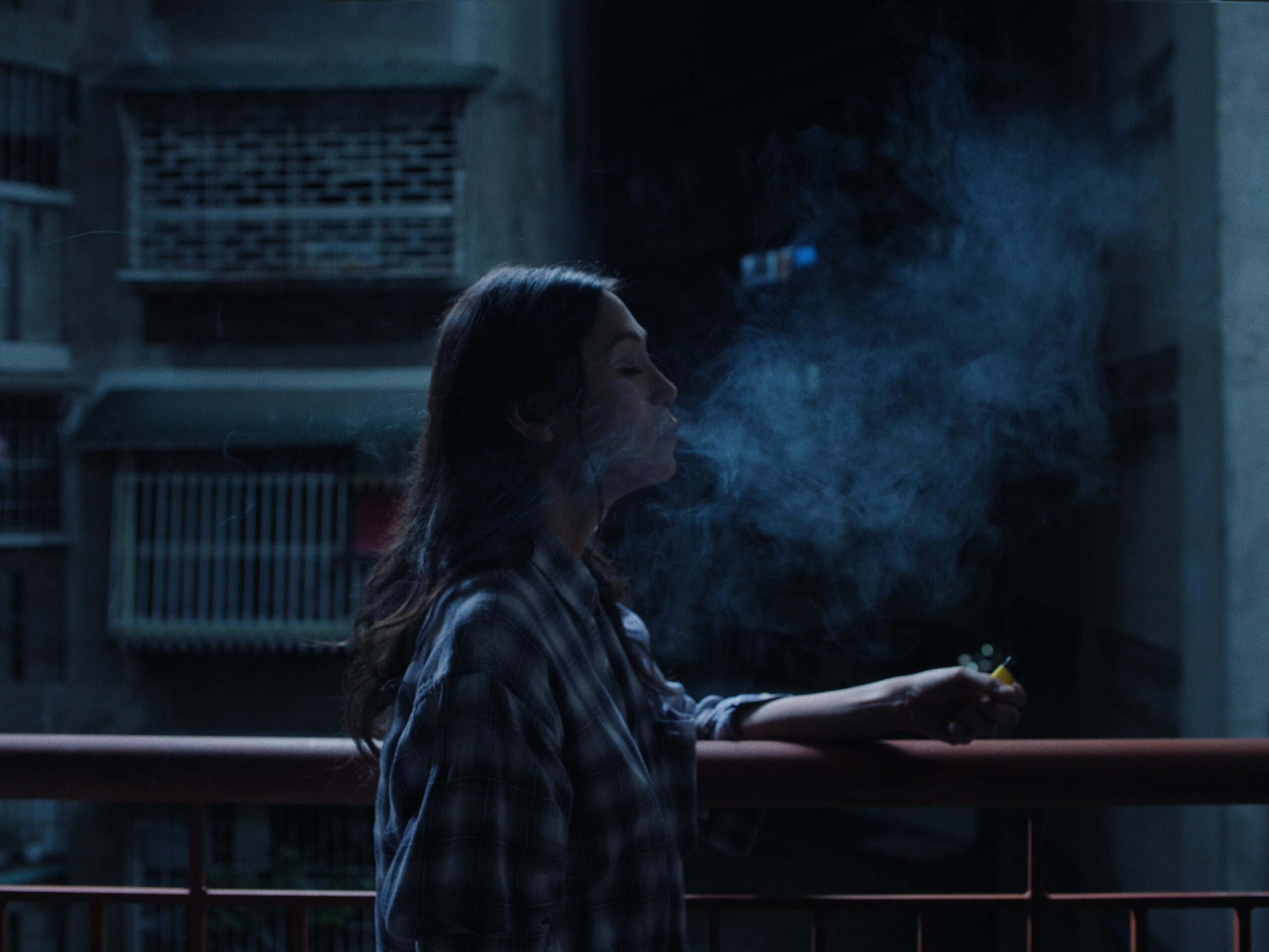
This nonlinearity and unpredictability assume an even more pivotal role in her third feature and international breakout Lingua Franca (2019) to impressionistic effect, as is the case with her Miu Miu commissioned short Shangri-La (2021). Lingua Franca follows Olivia (Sandoval), an undocumented trans Filipina immigrant living in Brooklyn and working as a caregiver to Olga (Lynn Cohen), an elderly woman already showing signs of dementia. Soon, she meets Alex (Eamon Farren), Olga’s grandson, and they take an interest in each other. But conflict arises when Alex learns about her social status and identity. Shangri-La, on the other hand, revolves around two lovers, a poor Filipina immigrant (Sandoval) and an American farmhand (Matthew Fifer), who enter a forbidden interracial relationship in Great Depression-era California. They roleplay in a confessional, longing for freedom, satiating their deepest desires, dreaming of alternate futures. “I will love who I want to and I’ll be loved right back,” says Sandoval defiantly.

Whereas Sandoval’s earlier works are readily indignant, with characters actively wrestling with inaction and the guilt or shame it carries in the face of systemic atrocities, Lingua Franca and Shangri-La insist on a more psychological disposition, something more inward and private, in which the protagonists are allowed to imagine possibilities within the tumult of the sociopolitical contexts in which they find themselves. In Lingua Franca, it manifests through Olivia’s effort in securing a Green Card marriage, however precarious it may seem; in Shangri-La, the female protagonist liberates herself from the bounds of time and reality through the sheer power of fantasizing. Both films likewise introduce something fresh into the director’s aesthetic sensibility: instead of defaulting to the more social-realist approach of their predecessors, Sandoval fashions Lingua Franca and Shangri-La as deeply lyrical and poetic—and of course as highly sensuous in the way she handles both film’s most intimate scenes, in which the power of eroticism lies in the suggestion of sex rather than in its simulation. Fingers running through a lover’s chest, moaning, souls melting into each other, etc. Desire that is never fully consummated or somehow constantly repressed, Sandoval suggests, always ends up being more real, more consuming, more transcendent.

Sandoval takes Shangri-La’s formal reach and sensuousness up a notch in her latest feature Moonglow (2026), a noirish romantic tale set in late 1970s Manila. In the story she stars as Dahlia, a jaded police officer who orchestrates a heist against her corrupt superior officer for the benefit of the city’s displaced underclass. As her former flame Charlie (Arjo Atayde) enters the picture to solve her own crime, the ghost of the past now seems inescapable, threatening to expose the incongruous realities she’s embroiled in. The luscious colors, as well as the steely resolve and calculation with which Sandoval imbues her performance to get the audience on board with Dahlia playing Robin Hood and Isaac Banks’s confined and voyeuristic framing conveying the tension between the protagonists and the tenebrous nature of the Marcosian era, not only make this period piece a sight to behold but also allow for the director’s best work yet. Sensuality here emanates from the ways in which Sandoval keeps Dahlia and Charlie apart, in how she renders the pulsating desire between them largely unfulfilled. Indeed, the thrill is in the anticipation, in what the director leaves to the viewer’s imagination.
But beyond engaging with thematic threads that have been animating Sandoval’s filmography, Moonglow is fundamentally fascinated with cinema as artifice: what bleeds into the frame, what lies outside its edges, and how revelatory they can be. It’s no surprise then that the film draws attention not only to its own visual flourishes, from sophisticated period design to a lavish late title card drop, but also to what is merely heard and not seen. At the same time, the film’s swerving structure is not only a matter of chronology but an attempt at infiltrating and reconfiguring the male auteurial gaze readily attached to film noir into a fundamentally feminist one—to be at once the desired and the desirer. More perceptively, Moonglow’s self-aware stylistic exuberance, despite its story being situated in a rather sinister and fraught historical moment, is Sandoval’s way of questioning the notion of desire operating within a vacuum, outside of history. Desire in the Filipino auteur’s cinema is not merely a primal and private impulse later finding outward rearticulation but something that emerges in response to encroaching forces of repression—a transgression that is sorely missed in Filipino as well as American cinema. In this way, Sandoval remains hauntingly relevant.
Lé Baltar is an independent culture writer and film critic based in Manila. A Golden Globes and Dorian Awards voter, her work has appeared in Indiewire, Rolling Stone, VICE, Esquire, CNN, and more. You can find her on Letterboxd and Instagram.
If you enjoyed this article, please consider tipping the author and/or supporting Ultra Dogme on Patreon, Ko-fi, or Substack, so that we may continue publishing writing about film + music with love + care.